

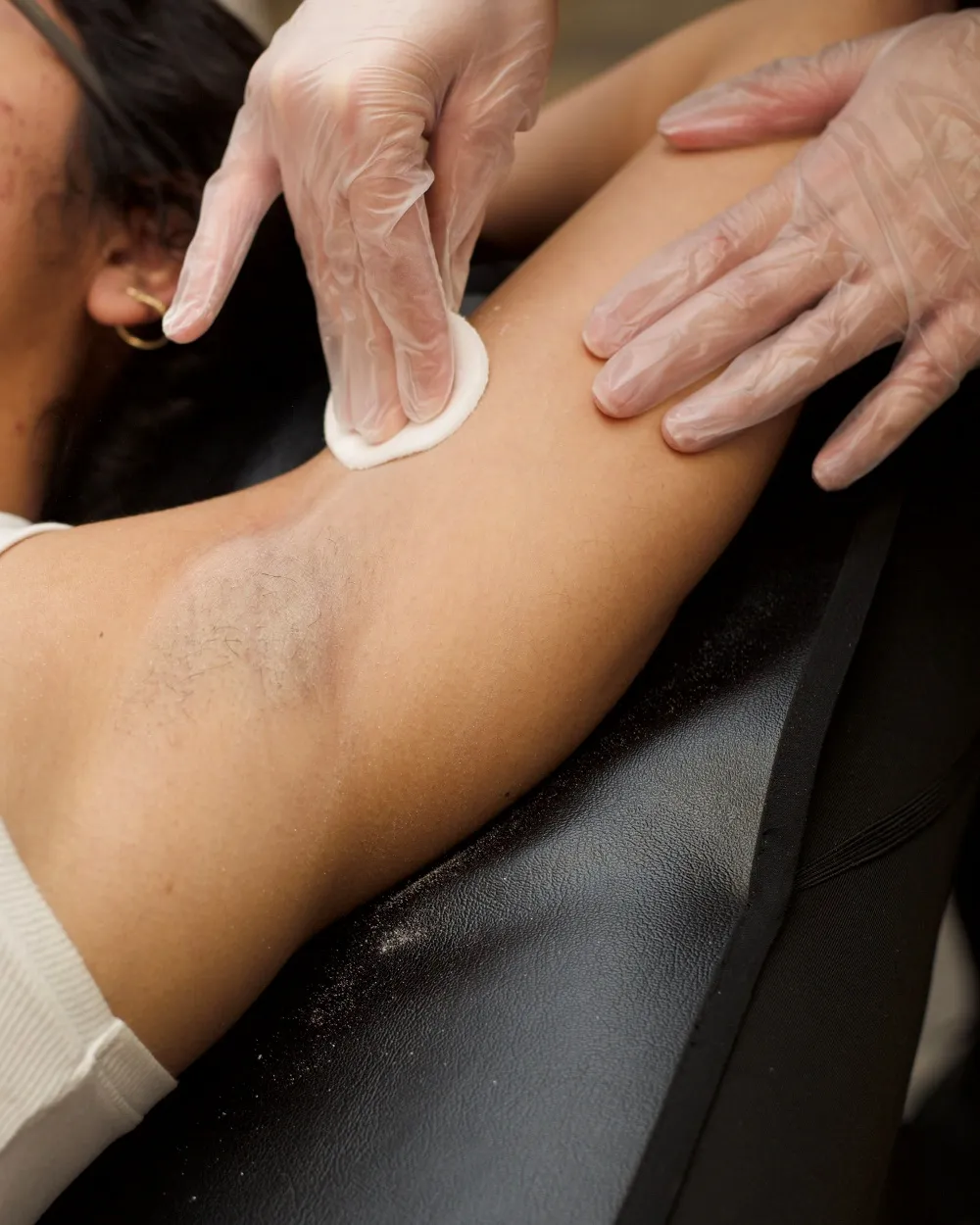
It’s one of those things nobody brings up, but plenty of people are quietly bothered by it. You raise your arm in a sleeveless top and notice the skin underneath looks darker than the rest. First, take a breath. Underarm darkening is very common, and it doesn’t mean you’ve done something wrong.
Why it happens
The underarm is a perfect storm for irritation. It’s warm, it folds, it rubs against sleeves, and it gets shaved, waxed, or sprayed with deodorant on a regular basis. Any of those can inflame the skin a little, and skin that’s been irritated repeatedly tends to hold on to pigment.
The most common triggers are friction from clothes and movement, razor irritation, reactions to deodorants or antiperspirants, and marks left behind after inflammation like ingrown hairs. Genetics play a role, too. Some people just get darker pigment in folds and creases, and that’s completely normal. Frequent hair removal can add to it, simply because the skin gets handled more often.
Gentle care that actually helps
Most of the advice here comes down to being less aggressive. A few habits make a difference:
-
Switch to looser tops on days you can, especially in hot weather.
-
Wash with a mild cleanser. Scrubbing hard makes irritation worse, not better.
-
If you suspect your deodorant is bothering you, try a different formula, or one that’s fragrance-free.
-
Moisturize after bathing so skin doesn’t get dry and cracked.
-
Don’t pick, scratch, or squeeze bumps.
It can take weeks to notice a difference, and sometimes months. That’s frustrating, but it’s how skin works.
Where hair removal comes in
How you remove underarm hair can affect the skin. Shaving skims the surface, and if the blade is dull or you go over the same spot repeatedly, you get irritation, razor burn, and sometimes ingrown hairs. Waxing pulls hair from the root, which many people find gentler on the skin day to day, but it can also cause redness for a short while, especially at first. Neither is perfect for everybody. If you notice that one method keeps irritating you, trying the other, or changing how you do it, might help.
Whatever you choose, avoid doing it on irritated skin, and keep the area clean and comfortable afterward.
Myths worth skipping
A quick search turns up a lot of advice that sounds harmless and isn’t. Lemon juice, baking soda, and harsh scrubs are the usual suspects, and they tend to irritate the skin rather than help it. Unmarked whitening creams ordered online are another one to avoid, since you can’t be sure what’s in them and underarm skin is thin.
Then there’s the idea that you can fix everything in a week. You can’t. Skin that took months to darken won’t change overnight, and anyone selling an instant fix is overpromising. The boring plan wins: less friction, less irritation, and a lot of patience. If you want to add a product, check with a professional first, especially if your skin is sensitive.
One more small thing: pay attention to what you wear. Sweaty synthetic fabrics trap moisture and rub, and swapping to breathable cotton on hot days sometimes helps more than any product.
What professional underarm brightening can offer
If home care isn’t enough, a trained provider can look at the area and suggest options that fit your skin. The point of an underarm brightening treatment is to help the area look more even, not to change your natural skin tone. Results vary, and there are no guarantees.
Before you book anything, ask:
-
What ingredients are used, and are they suitable for sensitive skin?
-
Is a patch test available?
-
How many visits might be needed, and what should I realistically expect?
-
What aftercare do I need to follow?
-
What happens if my skin reacts?
A good provider answers these without making you feel rushed.
What a first consultation might cover
A first visit is mostly a conversation. Expect questions about how long the darkening has been there, how you remove hair, what deodorant you use, and whether your skin reacts easily. The provider may look at the area, talk through options, and tell you honestly if brightening isn’t the right step yet, for example when the skin is currently irritated. You should leave knowing the plan, the likely number of visits, and the aftercare, not just a price.
When it’s worth seeing a doctor
Most underarm darkening is cosmetic. But if the skin has turned dark quickly, feels thick or velvety, smells different, or comes with itching, pain, or other symptoms, don’t wait. These can sometimes point to something that needs a medical look. A cosmetic treatment isn’t the right first step in that case.
Finding a safe, personal approach
There’s no single fix for every pair of underarms. Start gentle, be patient, and pay attention to how your skin responds. If you decide to go the professional route, pick someone who asks questions, explains what they’ll do, and isn’t pushing a package.
When you’re ready to talk options with a professional, you can browse the services available around Sacramento and Elk Grove and book a time at nakedskinwaxing.com.